
San Miguel's Verified Weekly Arrest Record
For a multi-day arrest log, San Miguel County points to the Sheriff's Booking Summary Report, posted on the Activity Logs page. Most examples cover seven days. That weekly span matters. Unlike the Current Inmate List, a summary preserves an arrest even after the person has been released. It can also hold a non-custody booking. The report pairs arrest identifiers with offense rows, and bookings can arrive from the Sheriff, Telluride Marshal's Department, Mountain Village Police Department, Colorado State Patrol, or another partner agency. So a city arrest can land in the county report.
The official county capture shows the separate booking, current-inmate, media-summary, and calls categories.
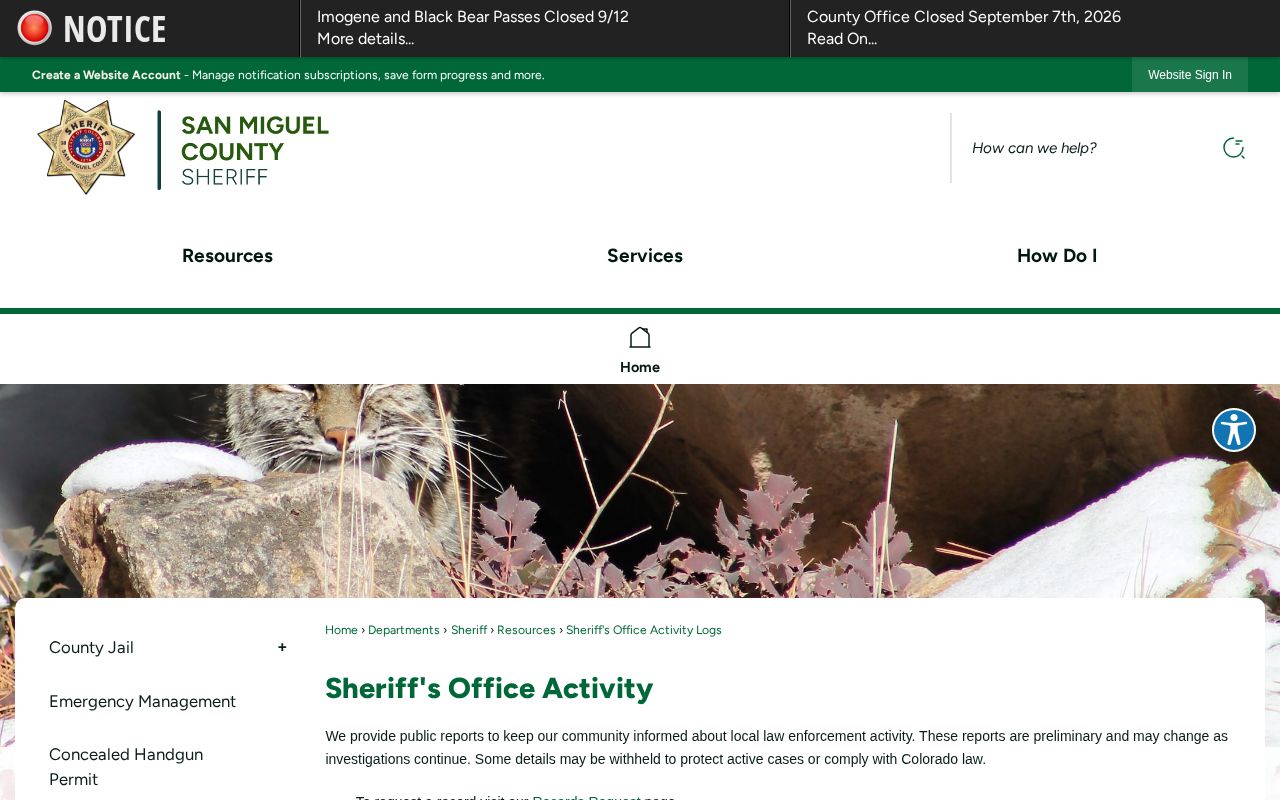
No one category answers every arrest, custody, and incident question.
Read a San Miguel Booking Summary
Start with the stated date range and the report footer. Skip any assumption that the upload date matches the arrest date. Begin from the activity hub, since dated PDF addresses change.
- Select Booking Summary. Choose the span containing the date in question. Current Inmate List and Week-to-Date Calls answer different questions.
- Locate the person or event. Search by surname, then compare booking number, name number, arrest date, agency, and location.
- Read every offense row. One booking can carry several statute, court, or crime-class entries. Each remains an charge.
- Save the identifiers. Arrest and incident numbers help Administrative Records locate an underlying report.
- Check the court later. The blotter does not show dismissal, diversion, plea, trial result, or another disposition.
Need something that happened only hours ago? Switch to the Arrests Last 24 Hours process, which starts with a call to the jail.
Fields in the San Miguel Arrest Log
The Booking Summary carries a broader field set than the public current-inmate PDF. Those identifiers help with precise follow-up.
| Field | Meaning and caution |
|---|---|
| Arrest time and date | The event time reported by the arresting agency. |
| Booking number | The county identifier for that custody event. |
| Name number | A separate person identifier that may connect events. |
| Agency and officer | The agency and arrested-by fields entered for the arrest. |
| Type and location | A coded arrest category and reported place, not legal conclusions. |
| Arrest and incident numbers | Keys for finding related agency reports. |
| Offense, statute, court, class | Charge rows as booked, not findings of guilt. |
| Bond | A release condition where shown, not a sentence. |
| Photo | No photograph appeared in the reviewed public summaries. |
Partner agencies and non-custody bookings appear too. Anyone under 18 shows up under a generic juvenile label. Protected details may be withheld, so never try to reconstruct a redacted identity.
Why Reports Follow the Weekend
Two examples show the lag. A June 14 through June 20 report carried a June 22 report date, and an August 16 through August 22 report carried an August 24 date. Publication tends to follow the covered week. It often lands near the next business day, though no deadline is guaranteed. The Current Inmate List runs Monday through Thursday. A weekend arrest can slip through both. It may miss the latest snapshot while the next weekly summary waits. Holiday timing goes unstated. The sound reading is that San Miguel County posts each report once complete, subject to corrections and lawful withholding. Note: A later report date never changes the arrest date printed inside the report.
Older San Miguel Arrest Reports
The activity page promises no fixed archive depth. Dated PDFs can be corrected, replaced, or unlinked. The record itself stays with the Sheriff. For older San Miguel County arrests, start with the Criminal Justice Record Request. Give the arrest date, name, booking number, agency, and incident number when known.
The Colorado Sheriff model retention schedule is a qualified baseline, not proof of local practice. It sets two years for certain activity logs. Major felony case records stay on file permanently. Other felony case records run ten years, while misdemeanor, petty, and traffic case records run three. A sheriff must obtain approval before using that schedule.
Ask which approved series applies. Also ask whether a legal hold, sealing order, destruction, or transfer blocks access. A PDF vanishing from the website proves nothing about destruction or sealing.
The county Archive Center handles administrative material, and its catalog lists no dedicated jail-booking collection. Newspapers are no substitute for criminal-justice records. If the Sheriff confirms an approved transfer, request the receiving archive, series title, date span, and finding aid. That detail sends your request to the right custodian.
San Miguel Sheriff Administrative Records684 County Road 63L
Telluride, CO 81435
970-728-4442
records@sanmiguelsheriff.org
Media Summaries Are a Separate Blotter
The Sheriff's Media Summary narrates selected deputy responses, complaints, crimes, and arrests. It can cover the same week as a Booking Summary. Even so, it is no exhaustive jail ledger. Week-to-Date Calls gives call-type context, not booked names. Use the Media Summary for the agency's account of an incident. The Booking Summary gives identifiers. The court record settles the outcome. Silence in one source does not mean an arrest never happened.
Local News Adds Arrest Context
Official sources come first. The Telluride Marshal news archive posts selective, dated announcements, including arrest and warrant releases. The Marshal's news page shows that announcement format, and no complete daily city roster exists alongside it.
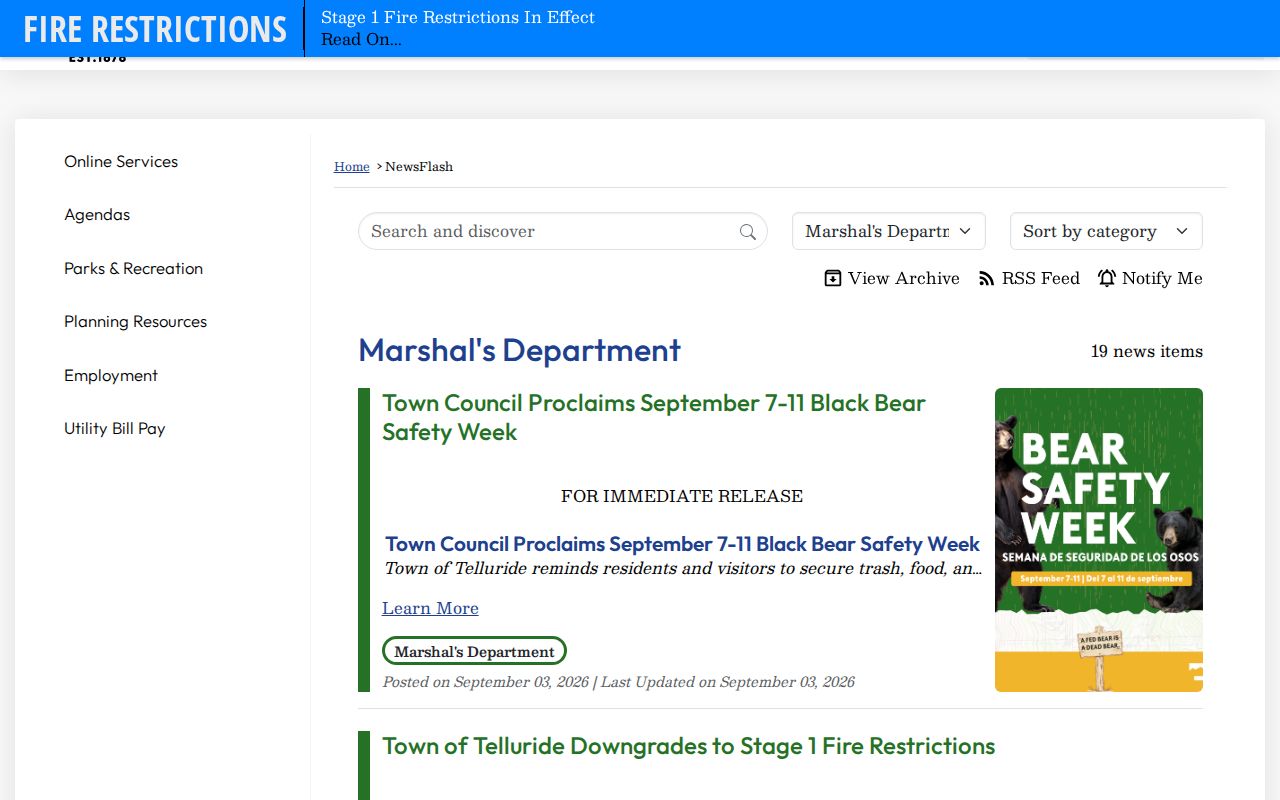
A news release explains one event. The county Booking Summary remains the booking source. Beyond official channels, KOTO featured stories offer dated reporting on crime, courts, arrests, and public safety across San Miguel County, though KOTO is independent news rather than the jail-record custodian.

News adds context, but names, custody status, and charges deserve a check against official San Miguel County sources.
From Arrest Entry to Disposition
A Booking Summary marks the start of a case. It does not show the final result. Later court proceedings can amend, reduce, dismiss, divert, or resolve the charges.
Names repeat in San Miguel County. Use an identifier before assuming an arrest entry belongs to the right person. A middle name or birth date settles it fast. The court file, not a news brief, holds the final word. It decides how a case ended. An arrest record only marks a booking. For the outcome, go to the clerk of court and the official record custodian. An entry can vanish from a later San Miguel County arrest report. That means little by itself. Release, transfer, or a routine publishing change can all explain it, so the clerk of court and the record custodian remain the only true arbiters of what a removal means.